Insoles for plumbers knee pain provide proven relief by offering superior cushioning, arch support, and shock absorption, which helps reduce the pressure on the knee joint during prolonged kneeling and standing.
Working as a plumber often means spending a lot of time on your knees. This can lead to knee pain, a common issue for those in this demanding profession. If you’re experiencing discomfort, you’re not alone, and there’s good news! Simple, effective solutions can bring you much-needed relief. This article will guide you through understanding knee pain in plumbers and how the right insoles can make a significant difference. Get ready to step towards a more comfortable workday.
Understanding Plumbers Knee Pain
Plumbers’ knee, often referred to as housemaid’s knee or prepatellar bursitis, is an inflammation of the bursa, a small fluid-filled sac located at the front of the kneecap. This condition is primarily caused by repeated or prolonged pressure and friction on the knee. For plumbers, this frequently involves kneeling on hard surfaces, crawling through tight spaces, and enduring long periods of standing, all of which can stress the knee joint and surrounding tissues.
The symptoms can range from mild aching and stiffness to more significant pain, swelling, and redness around the kneecap. This discomfort can make even simple tasks challenging, impacting your ability to work effectively and enjoy your life outside of work.
Why Plumbers Are Prone to Knee Pain
Several factors inherent to the plumbing profession contribute to knee pain:
- Prolonged Kneeling: Constantly being on hard, unforgiving surfaces like concrete or tile directly impacts the knee.
- Repetitive Motion: The nature of plumbing work often involves repetitive bending and straightening of the knee.
- Heavy Lifting: While not directly a knee action, carrying heavy tools and materials can affect overall body mechanics and increase stress on joints.
- Awkward Postures: Working in confined spaces requires contorted positions that place unusual stress on the knees and hips.
- Lack of Support: Standard work boots often lack adequate cushioning and arch support, exacerbating the problem.
How Insoles Can Help Plumbers Knee Pain

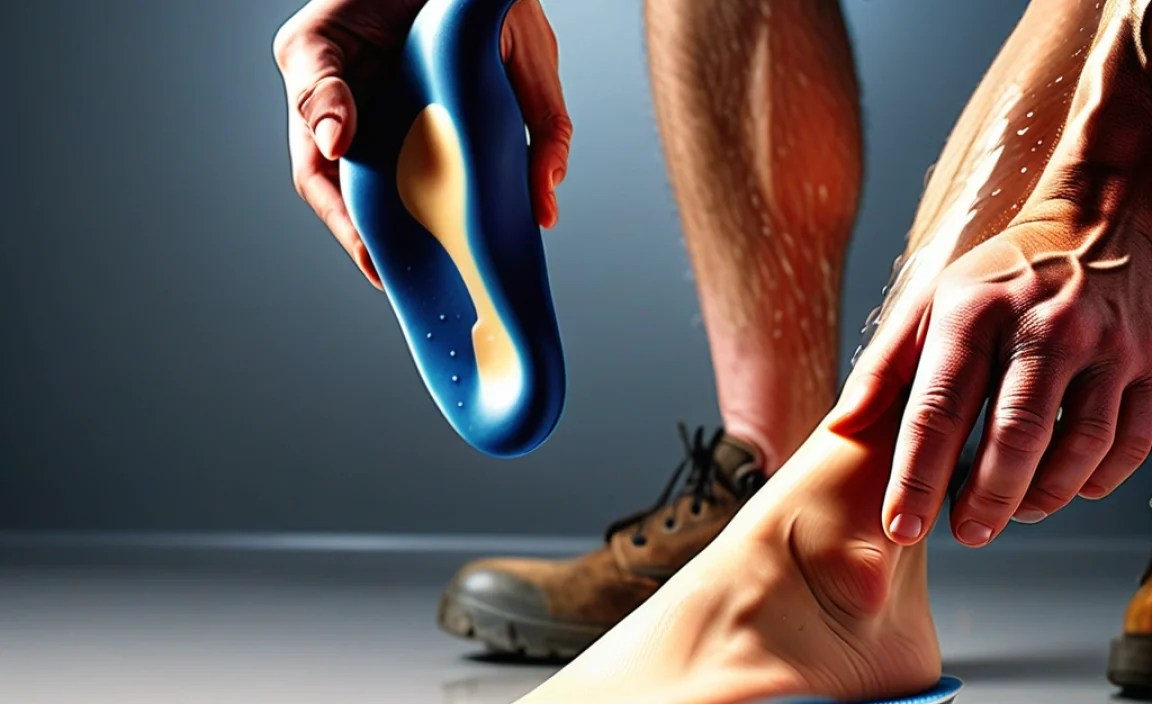
Insoles, also known as orthotics or shoe inserts, are designed to improve the fit and function of your footwear. For plumbers experiencing knee pain, the right insoles can be a game-changer. They work by addressing several key areas:
- Shock Absorption: Working on hard surfaces sends shockwaves up your legs with every step. Insoles with good cushioning absorb some of this impact, lessening the force transmitted to your knees.
- Arch Support: Proper arch support helps distribute weight evenly across your foot. When your arches are supported, your entire kinetic chain – from your feet to your knees, hips, and back – is better aligned, reducing strain.
- Cushioning for Kneeling: Some specialized insoles offer enhanced cushioning directly under the heel and ball of the foot, which can also provide some protective padding when kneeling.
- Alignment Correction: If your knee pain is due to issues like overpronation (where your foot rolls inward excessively), insoles can help correct your foot’s alignment, indirectly alleviating knee stress.
- Pressure Reduction: By redistributing pressure points, insoles can prevent the concentrated stress on certain areas of your foot and ankle that can contribute to referred knee pain.
The Science Behind Foot-Knee Connection
It’s crucial to understand that foot mechanics significantly influence knee health. The foot is the foundation of your body. When your feet aren’t properly supported or aligned, it can create imbalances that travel up the leg.
Consider this: When your arch collapses (overpronation), your tibia (the larger bone in your lower leg) tends to twist inward. This inward rotation can cause the kneecap to track improperly, leading to irritation and pain. Good insoles can help maintain proper foot posture, thereby stabilizing the lower leg and reducing undue rotation at the knee. Organizations like the American Podiatric Medical Association (APMA) offer valuable insights into how foot health impacts overall musculoskeletal wellness.
Choosing the Right Insoles for Plumbers Knee Pain

Not all insoles are created equal, and the best choice for a plumber’s knee pain will depend on individual needs. Here’s what to look for:
Key Features to Consider:
- Material:
- EVA Foam: Lightweight, good cushioning, and shock absorption.
- Gel: Excellent for shock absorption and can offer targeted pressure relief.
- Memory Foam: Molds to your foot for personalized comfort and cushioning, but can wear out faster.
- Cork: Durable, offers good arch support, and molds to the foot over time.
- Cushioning Level: Look for insoles with ample cushioning, especially in the heel and forefoot, to absorb impacts from hard surfaces.
- Arch Support Type:
- Neutral Arch Support: Suitable for most foot types.
- High Arch Support: For those with naturally high arches that may pronate.
- Stability/Motion Control: For individuals who overpronate and need help controlling excessive inward rolling.
- Heel Cup: A deep heel cup helps to stabilize the heel and provide better shock absorption.
- Durability: As a plumber, you’ll put your insoles through a lot. Opt for durable materials that can withstand daily, demanding use.
- Fit in Work Boots: Ensure the insoles are designed to fit into your specific work boots without making them too tight, which could cause other foot issues.
Types of Insoles:
Insoles generally fall into a few categories, each offering different benefits:
- Cushioning Insoles: Primarily focus on providing softness and shock absorption. Great for general comfort and reducing impact.
- Support Insoles: Offer structured arch support to help maintain proper foot alignment. Crucial for preventing or correcting overpronation.
- Orthotic Insoles: More specialized and often customized, these can address specific biomechanical issues. Over-the-counter orthotics aim to provide significant support and correction without a custom fit.
- Work Boot Specific Insoles: Many brands design insoles specifically for the demands of work boots, often featuring enhanced durability, slip resistance, and robust cushioning.
Top Insoles for Plumbers Knee Pain: A Comparative Look

To help you make an informed decision, here’s a look at some popular types of insoles and their suitability for plumbers’ knee pain. Remember, the best insole for you is highly personal, but these categories represent common, effective solutions.
Insole Comparison Table
| Insole Type | Primary Benefit | Best For | Potential Drawbacks |
| Maximum Cushioning | Superior shock absorption | Constant standing, hard surfaces, general knee impact relief | May offer less structured support |
| Active Arch Support | Foot alignment, pronation control | Overpronators, foot fatigue, pain radiating from feet to knees | Can feel too firm if you have flat feet |
| Work Boot Specific | Durability, enhanced support | Demanding job environments, heavy boots, long wear hours | Can be bulkier, might reduce boot flexibility |
| Gel-Propelled | Targeted impact absorption | Intense physical jobs, extra shock reduction for knees and joints | Can be heavier, may not suit all arch types |
Recommendations for Plumbers
When selecting insoles for plumbers’ knee pain, prioritize those that offer a blend of robust cushioning and stable arch support. Many plumbers benefit greatly from insoles designed for work boots, as they are built to withstand the rigors of the job and integrate well into rigid footwear.
For instance, a high-density EVA foam insole with a deep heel cup and firm arch support can significantly reduce the jarring impact of kneeling and walking on concrete. Gel inserts can be excellent additions to provide extra shock absorption in critical areas. Always look for insoles that promise to help with impact reduction and fatigue.
How to Use Insoles for Maximum Relief
Simply buying a pair of insoles isn’t enough; using them correctly is key to experiencing their full benefits and avoiding new problems.
Step-by-Step Guide to Using Insoles:
- Remove Existing Insoles: Most shoes and work boots have removable insoles. Take yours out to create space for the new ones. If your current insoles are glued in, you might need to gently pry them out or consider if the new insoles can be placed on top if they are thin enough.
- Clean Your Boots: Before inserting new insoles, give your work boots a quick brush out to remove any dirt or debris that could cause discomfort or wear down the new insoles prematurely.
- Insert New Insoles: Place the new insoles into your boots. Ensure they lie flat and fit snugly without bunching up. The heel of the insole should align with the heel of the boot.
- Initial Wear-In Period: It’s a good idea to break in new insoles gradually. Wear them for a few hours each day for the first week. This allows your feet and body to adjust to the new support and cushioning.
- Listen to Your Body: Pay attention to how your feet and knees feel. If you experience new or increased discomfort, adjust your wear time or consider if this particular insole is the right fit for you.
- Regular Check-Ups: Inspect your insoles periodically for signs of wear and tear. Flattened cushioning or worn arch support means it’s time for a replacement to maintain effectiveness.
Tips for a Smooth Transition:
- Start Gradually: Don’t jump into wearing insoles for a full 12-hour shift immediately. Start with a few hours at home or during lighter tasks.
- Proper Fit is Crucial: Ensure the insoles don’t make your boots too tight. This can lead to blisters, corns, or other foot ailments, negating the benefits. Your toes should still have room to wiggle.
- Choose the Right Insole for Your “Problem”: If your main issue is kneeling, look for extra padding. If it’s general foot fatigue and knee ache, focus on arch support and cushioning.
- Consider Professional Advice: If you have persistent or severe pain, consulting a podiatrist or physical therapist can help identify the exact cause of your knee pain and recommend the most suitable type of insole or orthotic. For instance, resources from the Nationwide Physiotherapy group highlight the interconnectedness of lower limb biomechanics.
When to Seek Professional Help
While insoles can provide significant relief, they are not a cure-all. There are times when you need to consult a medical professional.
Signs You Should See a Doctor or Podiatrist:
- Severe or Sudden Pain: Intense pain that limits your mobility or appears suddenly.
- Significant Swelling or Redness: If your knee is visibly swollen, hot to the touch, or red, it could indicate an infection or severe inflammation.
- Inability to Bear Weight: If you cannot stand or walk without extreme pain.
- Locking or Instability: If your knee feels like it’s locking up or “giving out.”
- No Improvement with Insoles: If you’ve tried appropriate insoles for several weeks and still experience significant pain.
- Previous Knee Injury: If your knee pain is related to a past injury.
A podiatrist can perform a biomechanical assessment to understand your foot structure and gait, helping to pinpoint the root cause of your knee pain. They can recommend the best course of action, which might include custom orthotics, specific exercises, or other treatments. For those in the UK, the NHS website offers guidance on seeking medical advice for knee pain, emphasizing when to consult a GP.
FAQ: Your Questions About Insoles and Plumbers Knee Pain Answered
Here are some common questions about using insoles for plumber’s knee pain:
Do insoles really help with knee pain?
Yes, they often do. By improving foot support and alignment, redistributing pressure, and absorbing shock, insoles can reduce the stress that travels up to the knee joint, thereby alleviating pain.
How long does it take to feel relief from insoles?
For some, relief is felt within a few days. For others, it might take a couple of weeks as their body adjusts to better support. Consistent use is key.
Can I use insoles in any type of shoe?
Insoles can be used in most shoes with removable insoles, including work boots, sneakers, and dress shoes. Make sure they fit properly without making the shoe too tight.
Are custom orthotics better than over-the-counter insoles for knee pain?
Custom orthotics are specifically made for your feet and can be very effective for complex foot issues. However, high-quality over-the-counter insoles can provide significant relief for many people, especially for general knee pain caused by poor support or shock absorption.
How often should I replace my insoles?
This depends on the material and how much you use them. Generally, insoles should be replaced every 6-12 months, or sooner if you notice they have flattened, lost their cushioning, or are no longer providing support.
What if my insoles make my knee pain worse?
If new or existing insoles increase your knee pain, stop using them immediately. It could mean the support isn’t right for your foot type, they are making your shoe too tight, or the pain has another underlying cause that insoles can’t address alone. Consult a foot health professional.
Are there specific insoles designed for kneeling?
While no insole is specifically a “kneeling pad,” some insoles offer extra cushioning in the heel and forefoot that can help absorb some impact when you do kneel. However, for frequent or prolonged kneeling, dedicated knee pads worn over your pants are usually the most effective form of direct knee protection.
Conclusion: Step Towards a Pain-Free Workday
Plumber’s knee pain is a common adversary, but it doesn’t have to be a permanent one. By understanding the impact of daily work on your feet and knees, and by choosing the right insoles, you can take significant steps towards alleviating discomfort and improving your overall well-being.
Remember, the right insoles offer a powerful combination of cushioning to soften impacts, arch support to restore natural alignment, and stability to reduce stress on your joints. Don’t underestimate the importance of your footwear foundation. Take the time to find insoles that fit well into your work boots and provide the support you need. Gradually introduce them into your routine, listen to your body, and don’t hesitate to seek professional advice if your pain is severe or persistent. Your feet work hard for you – it’s time to give them the support and care they deserve. Here’s to more comfortable days on the job!
