Insoles can transform your workday as a mechanic, offering essential comfort and support to combat the constant strain of standing and working on hard concrete floors. By choosing the right insoles, you can significantly reduce foot fatigue, prevent pain, and boost your overall well-being throughout your demanding shifts.
Working as a mechanic means spending a lot of time on your feet, often on unforgiving concrete surfaces. This can lead to aching feet, sore legs, and even long-term issues. But there’s good news! Insoles designed specifically for this environment can make a world of difference. They act like a shock absorber for your feet, giving you much-needed cushioning and support.
Think of it this way: every step you take on concrete sends a jolt up through your body. Without any extra padding, your feet and joints have to absorb all that impact. This is where specialized insoles come in. They’re built with materials and designs that help absorb shock, distribute weight more evenly, and provide proper arch support. This can help prevent conditions like plantar fasciitis, heel spurs, and general foot fatigue that many mechanics experience.
In this guide, we’ll walk you through everything you need to know to find the best insoles for your needs. You’ll learn about the types of insoles available, what features to look for, how to pick the right ones for your specific foot type and work demands, and even how to care for them to ensure they last. Get ready to say goodbye to tired, aching feet and hello to a more comfortable, energized workday!
Why Mechanics Need Specialized Insoles

Mechanics’ jobs are physically demanding. You’re constantly standing, walking, and sometimes even kneeling on hard surfaces for hours on end. Concrete floors, while common and durable, offer very little natural cushioning. This constant pressure can lead to a variety of foot and leg problems.
The repetitive impact on concrete can cause:
- Foot Fatigue: Muscles in your feet and legs get tired quickly without adequate support and cushioning.
- Plantar Fasciitis: Inflammation of the thick band of tissue that runs across the bottom of your foot, causing heel pain.
- Metatarsalgia: Pain and inflammation in the ball of the foot.
- Achilles Tendinitis: Inflammation of the Achilles tendon, which connects your heel bone to your calf muscle.
- Knee and Back Pain: Foot pain and improper gait can lead to pain in other parts of your body.
- Shin Splints: Pain along the shinbone, often caused by repetitive stress.
Standard work boots often lack the necessary support and shock absorption, making them insufficient on their own. Insoles act as a crucial upgrade, adding that vital layer of comfort and protection. They can help align your feet properly, improve your posture, and reduce stress on your joints, making long hours on concrete much more manageable.
Understanding Insole Basics: What to Look For

Not all insoles are created equal. To find the best pair for a mechanic, you need to understand the different types and features available. Think of insoles as a custom upgrade for your work boots, addressing specific needs.
Types of Insoles
Insoles generally fall into a few main categories, each offering a different level of support and cushioning:
- Cushioning Insoles: These are often made from soft materials like foam or gel. They excel at absorbing shock and providing a plush feel underfoot, ideal for reducing impact on concrete.
- Support Insoles (Orthotics): These provide more structured arch support and can help correct foot alignment. They are good for people with flat feet or high arches who need help stabilizing their gait.
- Stability Insoles: A middle ground that offers both cushioning and a degree of arch support to help prevent excessive inward or outward rolling of the foot (pronation or supination).
- Specialty Insoles: Some insoles are designed for specific issues, like heel pain relief (with added heel cups) or enhanced shock absorption for high-impact activities.
Key Features for Mechanics
When choosing insoles for working on concrete, prioritize these features:
- Superior Shock Absorption: This is non-negotiable. Look for insoles with advanced cushioning materials like high-density EVA foam, gel inserts, or specialized impact-absorbing composites. These materials help dissipate the force of each step.
- Arch Support: Proper arch support is crucial for distributing weight evenly and reducing strain. Whether you have high arches, flat feet, or neutral arches, there’s an insole designed to provide the right level of support.
- Heel Cup: A deep heel cup helps stabilize the heel, preventing it from rolling inward or outward and providing extra cushioning where you need it most.
- Durability: Mechanics’ insoles need to be tough. Look for materials that resist compression and wear, ensuring they won’t break down quickly under constant pressure and friction.
- Moisture-Wicking Properties: Long hours can lead to sweaty feet. Insoles with breathable fabrics or moisture-wicking technology help keep your feet dry and comfortable, reducing the risk of blisters and odor.
- Antimicrobial Treatment: To combat odor and bacteria build-up, consider insoles with built-in antimicrobial properties.
- Slim Profile (if needed): If your work boots are already snug, opt for a lower-profile insole that won’t take up too much space and make your boots feel tight.
Choosing the Right Insoles for Your Foot Type

Understanding your foot type is the first step to finding insoles that offer maximum comfort and support. Your foot’s arch plays a significant role in how you experience pressure and support.
Identifying Your Arch Type
A simple way to determine your arch type is the “wet test”:
- Wet the bottom of your foot.
- Step onto a piece of sturdy paper (like a brown paper bag) or a dark floor.
- Examine the imprint left by your foot.
Here’s what the imprint might tell you:
- Neutral Arch: You’ll see a distinct imprint of your heel and the ball of your foot, with a noticeable curve inward where the arch is. This is the most common foot type. People with neutral arches generally have good shock absorption and may benefit from all types of insoles, but often prefer those offering good cushioning and general support.
- Flat Arch (Low Arch): Your imprint will show almost your entire foot, with very little curve inward. This means your arch collapses, and your foot likely rolls inward (overpronates). You’ll need insoles with strong arch support and motion control to help stabilize your foot.
- High Arch: You’ll see a very thin line, or even no line at all, connecting your heel and the ball of your foot. This indicates your arch is very pronounced. People with high arches tend to have less natural shock absorption and can experience pain from the pressure concentrated on the heel and balls of their feet. You’ll want insoles that provide ample cushioning, especially in the heel and ball of the foot, and some arch support to distribute pressure more evenly.
Insole Recommendations by Foot Type
For Neutral Arches: Focus on insoles that offer a balance of cushioning and moderate support. Gel or foam insoles with mild arch contours are usually a great choice. They will add much-needed shock absorption without altering your natural gait too much.
For Flat Feet (Overpronators): You need insoles that control pronation. Look for those with a deep heel cup, firm arch support, and a sturdy construction. Materials like rigid plastic or composite materials shaped into an orthotic can provide the necessary stability. They help guide your foot into a more neutral position.
For High Arches (Underpronators/Supinators): Your priority is cushioning to absorb impact and mild support. Choose insoles with generous padding, especially in the heel and forefoot. Some gentle arch contouring can help distribute pressure, but avoid overly aggressive arch support as this can increase discomfort.
Top Insole Features & Technologies Explained
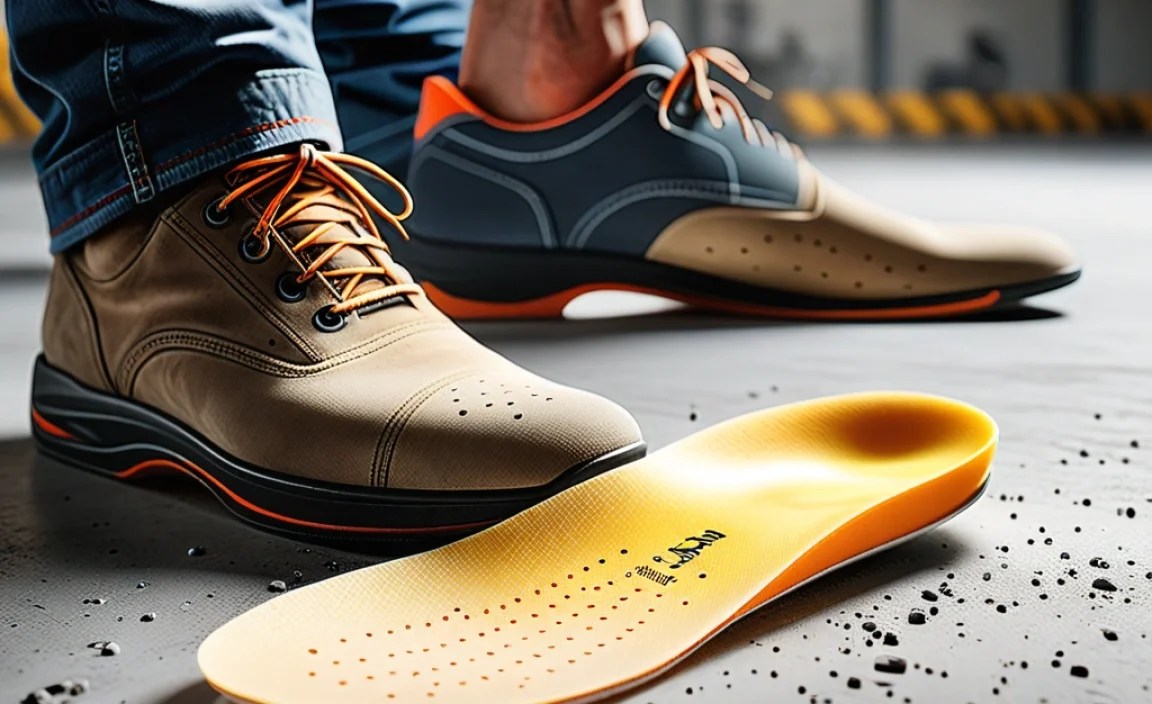
The world of insoles has advanced significantly. Here are some of the technologies and features you’ll encounter when looking for the best comfort on concrete.
Materials Matter
EVA (Ethylene-Vinyl Acetate): This is a common foam material used in many insoles. Higher-density EVA offers better cushioning and durability than lower-density foams. It provides a good balance of softness and support.
Memory Foam: This viscoelastic foam molds to the unique shape of your foot over time, offering personalized cushioning. While comfortable, it can sometimes lack the necessary structural support and may compress over time, reducing its effectiveness.
Gel: Gel insoles offer excellent shock absorption and can provide a cooling sensation. They are often used in targeted areas like the heel or forefoot for extra cushioning. However, some gel insoles can be less supportive than firm foam or orthotic materials.
Polyurethane (PU): This is a denser foam that is often more durable and supportive than EVA. It’s commonly found in higher-end insoles and orthotics where robust support is needed.
Composite or Carbon Fiber Plates: These rigid inserts are sometimes embedded in insoles to provide exceptional stability and support, particularly for those who need to control foot motion.
Innovative Technologies
Shock-Absorbing Pods: Some insoles have distinct gel or foam pods placed in high-impact areas (like the heel) to specifically cushion and absorb shock.
Dynamic Arch Contours: These are arches designed to flex and adapt to your foot’s movement, providing support without being too rigid.
Breathable Top Covers: Materials like mesh or specialized fabrics that wick away moisture are important for keeping feet dry and preventing odor.
Heel Stabilizers: Features designed to cup and cradle the heel, preventing excessive side-to-side motion.
Comparing Popular Insole Brands and Models for Mechanics

Choosing the right brand can be overwhelming, but focusing on features and reviews specific to demanding work environments can help. Here’s a look at how some well-regarded insoles might stack up for mechanics.
Insole Comparison Table
This table provides a general overview. Specific models within brands will vary.
| Brand/Model (Example) | Primary Benefit | Material Focus | Arch Support Level | Best For | Price Range (Approx.) |
| Superfeet GO | All-day comfort, moderate support | Combination of foam and supportive structure | Medium | Neutral arches, long hours on feet, moderate shock absorption needed. | $$$ |
| Powerstep Pinnacle | Strong arch support, stability | Rigid support structure with foam | High | Flat feet, overpronation, those needing significant correction and support. | $$ |
| Dr. Scholl’s Work | Shock absorption, budget-friendly | Gel and foam layers | Low to Medium | General comfort, basic shock absorption for occasional long hours. | $ |
| GEL-Heel (ASICS) | Extreme heel cushioning | Gel technology | Low | Heel pain, those who bear heavy heel impact, need maximum heel shock absorption. | $$ |
| Kore Essentials KORE | Deep heel support, shock disbursement | Proprietary foam, deep heel cup | Medium to High | All arch types seeking enhanced stability and shock absorption. | $$$$ |
| Oofos Oofoam | Recovery, ultra-soft cushioning | Proprietary foam (OOfoam™) | Low to Medium | Recovery after long shifts, extreme softness, plantar fasciitis relief. | $$$ |
Note: Prices are estimates and can vary based on retailer and sales.
What Mechanics Are Saying: Insole Reviews
Many mechanics swear by insoles that offer robust cushioning combined with a stable base. Here’s a summary of common feedback:
- “Game changer for my knees and back. The constant standing on concrete was killing me, but these insoles make a huge difference.”
- “I tried three different brands. The ones with a really deep heel cup and good arch support were the best for keeping my feet from aching by the end of the day.”
- “Gotta have good shock absorption. These foam and gel combos really do cushion the blows from the concrete floor.”
- “Durability is key. Some cheaper insoles break down too fast. I look for brands known for lasting through tough use.”
- “My boots are already supportive, but adding these insoles took the comfort to a whole new level. Worth every penny.”
How to Properly Insert and Break In Your New Insoles
Once you’ve chosen your perfect insoles, the next step is to put them to work. Proper insertion and a gentle break-in period will ensure you get the most comfort and benefit from them.
Step-by-Step Insertion Guide
1. Remove Existing Insoles: Take out the original insoles from your work boots. If they are glued in, you might need to carefully pry them out with a flat tool.
2. Compare Sizes: Place your new insole next to the original insole. Ensure they match in length and width. Many insoles can be trimmed to fit.
3. Trim if Necessary: If your new insoles are too long, use sharp scissors to carefully trim the excess material. It’s best to mark the length you need by tracing the original insole or your foot inside the boot. Trim a little at a time to avoid over-cutting.
4. Insert the New Insole: Slide the trimmed insole into your boot. Make sure it lies flat and sits snugly against the bottom of the boot. The heel of the insole should sit evenly in the heel of the boot.
5. Check for Fit: Put on your boot and walk around. You should feel the support and cushioning. Ensure there are no uncomfortable pressure points or slipping.
Breaking In Your Insoles
Most modern insoles, especially those made from foam or gel, don’t require a lengthy break-in period. However, to ensure maximum comfort and allow your feet to adapt, it’s a good idea to:
- Start Gradually: Wear your new insoles for a few hours each day for the first few days.
- Increase Wear Time: As your feet get used to the support, gradually increase the amount of time you wear them each day.
- Listen to Your Feet: If you experience any unusual discomfort or soreness, take a break and re-evaluate the fit. Sometimes a slight adjustment or further trimming is needed.
- Full-Time Wear: After about a week, or when you feel completely comfortable, you can wear them for your entire workday.
For insoles with more rigid orthotic support, a slightly longer break-in period might be beneficial. This allows your foot muscles to adjust to the new alignment.
Maintaining Your Insoles for Longevity
Your insoles are an investment in your comfort and foot health. Proper care will extend their lifespan and keep them performing at their best.
Cleaning Your Insoles
Hand Wash: The safest way to clean most insoles is by hand. Use cool or lukewarm water and a mild soap (like hand soap or a gentle detergent).
Scrub Gently: Use a soft brush or a cloth to gently scrub away dirt and sweat. For tougher grime, a bit more pressure might be needed, but be careful not to damage the materials.
Rinse Thoroughly: Make sure to rinse out all the soap residue.
Air Dry Completely: This is crucial. Never put insoles in a dryer or use direct heat, as this can damage the materials and cause them to warp or shrink. Let them air dry completely in a well-ventilated area away from direct sunlight. This can take 24-48 hours depending on humidity.
When to Replace Your Insoles
Insoles don’t last forever, even with good care. Look out for these signs that it’s time for a new pair:
- Visible Wear and Tear: If the cushioning material is compressed, torn, or showing significant thinning.
- Loss of Support: If you start feeling the old aches and pains returning, it’s a sign the insoles are no longer providing adequate support.
- Persistent Odor: Even after cleaning, if an insole continues to smell, it might be a sign that bacteria have deeply penetrated the material.
- Pain Returns: The most obvious sign – if your foot, knee, or back pain starts to return, it’s time to consider replacing your insoles.
Generally, most insoles for active or demanding use should be replaced every 6-12 months, depending on the frequency of use and the quality of the insole. For mechanics, due to the demanding environment, leaning towards the 6-month mark is often a wise choice.
Understanding Foot Health for Mechanics
Beyond just wearing insoles, taking a holistic approach to foot health can prevent problems and enhance comfort. For anyone spending long hours on hard surfaces like concrete, proactive care is essential.
Common Foot Issues and Prevention
As mentioned, mechanics are prone to several foot ailments due to prolonged standing and impact. Addressing these proactively can save you pain and potential medical expenses.
Plantar Fasciitis: This can be caused by strain on the plantar fascia ligament. Prevention includes regular stretching of the calf muscles and feet, wearing supportive footwear, and using insoles that offer good heel support and cushioning.
Metatarsalgia: Pain in the ball of your foot.
