Insoles for flat feet provide essential arch support, cushioning, and alignment to reduce pain and improve comfort. This guide covers what flat feet are, why insoles help, how to choose the right ones, and simple steps for their effective use, making better foot health achievable for everyone.
Having flat feet can sometimes feel like you’re walking on a less-than-ideal foundation. It’s a common condition where the arches of your feet roll inward, and many people experience discomfort or pain as a result. This doesn’t have to be your daily reality! Understanding your feet and how the right insoles can support them is the first step toward walking, standing, and moving with newfound ease. We’ll break down the basics, explore the types of insoles that can help, and guide you on how to find and use them. Get ready to give your feet the comfort and support they deserve!
Understanding Flat Feet: What You Need to Know

Flat feet, also known medically as pes planus, is a condition where the arches on the inside of your feet are flattened, allowing most or all of the sole to touch the floor. For many people, flat feet are not a problem and cause no pain. However, for others, it can lead to discomfort, fatigue, and even affect posture and the alignment of the rest of the body.
There are two main types of flat feet:
- Flexible Flat Feet: This is the most common type. The arch appears when your foot is not bearing weight, such as when you’re sitting or kicking your legs up. When you stand, the arch disappears.
- Rigid Flat Feet: In this type, the arch is absent whether you are standing or sitting. This type is less common and can sometimes be associated with structural issues in the foot.
Why can flat feet cause issues? When your arches are not properly supported, the rest of your foot and leg structures have to compensate. This can lead to:
- Foot Pain: Especially in the arch, heel, or ball of the foot.
- Ankle Pain: The way your foot rolls can strain your ankle.
- Knee and Hip Pain: Misalignment can travel up the kinetic chain.
- Plantar Fasciitis: Inflammation of the thick band of tissue that runs across the bottom of your foot.
- Shin Splints: Pain along the shin bone.
- Bunions and Hammer Toes: Over time, altered foot mechanics can contribute to these deformities.
It’s important to understand that flat feet are not necessarily a “problem” to be “fixed,” but rather a characteristic of your foot that might require supportive management to prevent discomfort. The good news is that with the right tools, like supportive insoles, you can significantly improve your comfort and function.
Why Insoles Are a Game-Changer for Flat Feet

Insoles, also known as orthotics or arch supports, are inserts that you place inside your shoes to provide extra cushioning, shock absorption, and support. For individuals with flat feet, their primary benefit is providing the arch support that the foot naturally lacks.
Here’s how insoles can make a significant difference:
- Arch Support: This is the main role. Insoles encourage the natural curve of the arch, helping to distribute body weight more evenly across the foot. This prevents the excessive inward roll (pronation) that often accompanies flat feet.
- Cushioning and Shock Absorption: Standing and walking can put a lot of stress on your feet. Insoles add a layer of cushioning that absorbs impact, reducing pressure on the balls of your feet, heels, and joints.
- Alignment and Stability: By supporting the arch, insoles help to keep the foot in a more neutral position. This improved alignment can positively affect your ankles, knees, hips, and even your back, leading to better posture and reduced strain on other parts of your body.
- Pain Relief: By addressing the root causes of pain associated with flat feet – lack of support and excessive pronation – insoles can offer significant relief from common foot ailments like plantar fasciitis, heel spurs, and general foot fatigue.
- Enhanced Performance: For athletes or active individuals, proper foot support can improve efficiency, reduce fatigue, and lower the risk of injury, allowing for longer and more comfortable activity.
Think of insoles as customized support systems for your feet. They don’t change the structure of your foot, but they provide the necessary foundation and cushioning to minimize stress and maximize comfort throughout your day.
Types of Insoles for Flat Feet
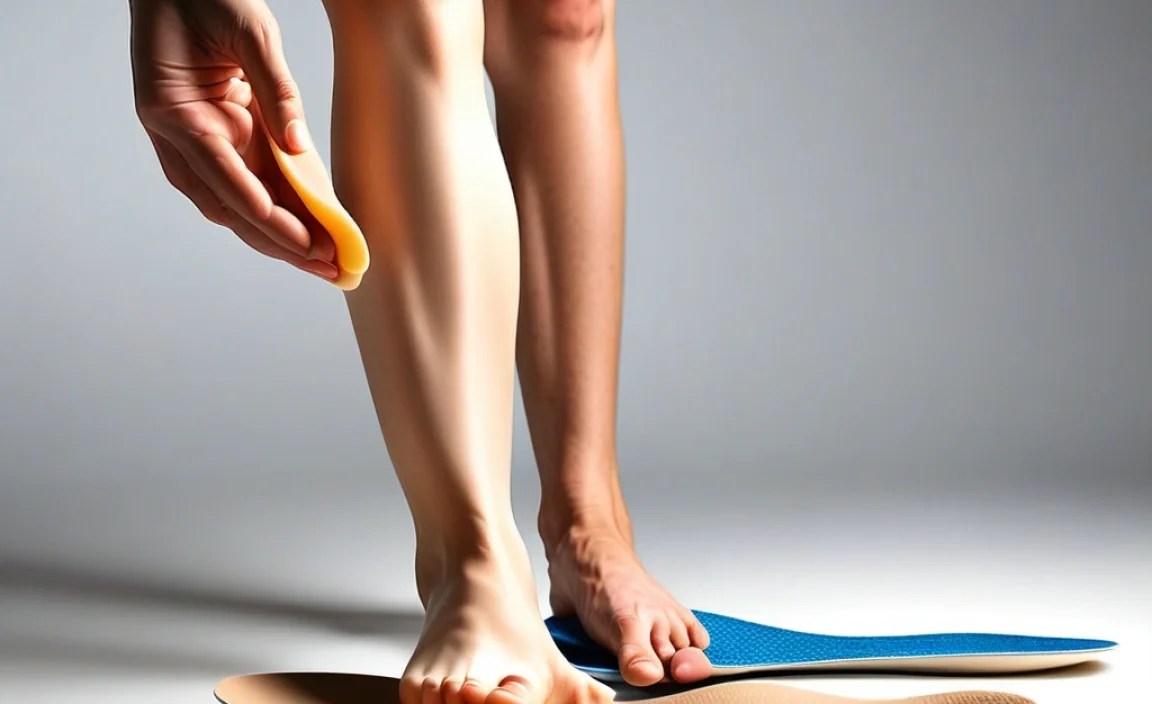
Navigating the world of insoles can seem overwhelming, but understanding the different types can help you make a more informed choice. Insoles for flat feet generally fall into a few categories, based on their purpose and material.
1. OTC (Over-the-Counter) Insoles
These are the most accessible and affordable option. You can find them readily available at pharmacies, sporting goods stores, and online retailers. They are designed for general use and come in various levels of support and cushioning.
- Pros: Affordable, widely available, easy to use immediately, good for mild to moderate support needs, come in various materials (foams, gels, cork).
- Cons: May not offer the precise fit or level of support needed for severe flat feet, can wear out faster than custom options.
When looking at OTC insoles, consider:
- Arch Height: Many come labeled as “neutral,” “medium,” or “high” arch support. For flat feet, you’ll generally want a medium to high arch support.
- Cushioning: Some are firm and supportive, while others offer plush, soft cushioning. Balance your need for support with comfort.
- Material: Foam insoles are lightweight and offer good shock absorption. Gel insoles provide excellent cushioning. Carbon fiber or rigid plastic insoles offer maximum support but less cushioning.
2. Semi-Custom Insoles
These are a step up from OTC options. They may offer more advanced features and slightly more personalized support, or can be modified by a professional to better fit your foot. Some brands offer online fitting tools or gait analysis to help you select the best semi-custom option for your needs.
- Pros: Offer better support and durability than most OTC insoles, can be more cost-effective than custom orthotics, some professional modification might be possible.
- Cons: More expensive than OTC insoles, may still not be a perfect fit for unique foot structures.
3. Custom-Molded Orthotics
These are specifically designed and made for your individual feet. They are typically prescribed by a podiatrist or orthotist after a thorough examination, including casting or digital scanning of your feet. Custom orthotics are the most effective for severe flat feet or complex foot conditions because they address the exact biomechanics of your foot.
- Pros: The highest level of personalized support and correction, most effective for significant flat feet and associated pain, durable construction.
- Cons: Most expensive option, requires professional consultation and fitting, takes time to produce.
For most beginners experiencing mild to moderate discomfort from flat feet, starting with a good quality OTC insole with appropriate arch support is an excellent first step. If your pain persists or is severe, consulting a healthcare professional for semi-custom or custom options is recommended.
Choosing the Right Insoles for Your Flat Feet
Selecting the perfect insole can make a world of difference. Here’s a practical guide to help you find the best match for your flat feet:
Assess Your Arch Type and Foot Mechanics
While you know you have flat feet, understanding the degree can help. A simple test is the “wet foot test.” Wet the bottom of your foot and step onto a piece of paper or dry pavement. Look at the imprint:
- If you see almost your entire foot, you likely have flat feet.
- If there’s a slight curve inward, you might have a low arch.
- If there’s a significant curve, you likely have a normal or high arch.
For flat feet, you’ll want an insole that:
- Provides adequate arch support: Look for insoles with a pronounced, yet comfortable, arch curve.
- Controls pronation: The insole should help guide your foot into a more neutral position as you walk or stand.
- Offers cushioning: Especially if you experience heel pain or stand for long periods.
Consider Your Activities
What you use your insoles for is crucial:
- Everyday Wear: You might prioritize comfort and moderate support. Soft cushioning combined with a supportive arch is ideal.
- Athletic Activities (Running, Walking, Sports): You’ll need more robust support to handle impact and prevent excessive movement. Look for insoles designed for your specific sport, offering shock absorption and stability.
- Work/Standing Jobs: Durability and all-day comfort are key. Firm support with good cushioning can prevent fatigue.
Material Matters
Different materials offer different benefits:
- Foam/EVA: Lightweight, good shock absorption, often found in everyday and athletic insoles.
- Gel: Excellent cushioning and shock absorption, can be good for high-impact activities and relieving pressure points.
- Cork: Molds to the foot over time, offers good support and is breathable.
- Thermoplastics/Rigid Plastics/Carbon Fiber: Offer maximum support and control motion, often used in more medical-grade orthotics.
Fit and Feel
This is paramount:
- Try them on: If possible, try insoles in your shoes. Walk around a bit.
- Toe Box Clearance: Ensure the insole doesn’t push your foot too high in the shoe, making the toe box feel cramped.
- Heel Cup: A well-defined heel cup helps to stabilize your heel and provide an extra layer of cushioning.
- Comfort is Key: Even with the best features, if an insole is uncomfortable, it’s not the right one. There might be a slight break-in period, but they shouldn’t cause new pain.
Consult a Professional (When to Seek Help)
If you have severe pain, a significant deformity, or if OTC options aren’t providing relief after a few weeks, it’s wise to see a doctor or podiatrist. They can assess your condition and recommend custom orthotics or specific types of insoles.
For a quick comparison of common insole types, consider this:
| Insole Type | Best For | Pros | Cons | Price Range (USD) |
|---|---|---|---|---|
| OTC Basic Cushioning | Mild discomfort, everyday wear, extra comfort | Very affordable, readily available, soft feel | Minimal arch support, limited durability | $10 – $25 |
| OTC Arch Supports (Medium/High Arch) | Mild to moderate flat feet, general pronation control | Good balance of support & cushioning, widely available | May not be specific enough for complex feet, durability varies | $20 – $50 |
| Specialty Athletic Insoles | Running, sports, high-impact activities | Enhanced shock absorption, stability for specific movements | Can be sport-specific, may have less flexibility | $30 – $70 |
| Semi-Custom Insoles | Moderate to severe flat feet, persistent pain | Better contouring, more durable, some professional input possible | More expensive than OTC, not fully personalized | $75 – $150 |
| Custom Orthotics | Severe/complex flat feet, medical conditions, chronic pain | Maximum personalized support, targets specific biomechanics, highly durable | Most expensive, requires professional evaluation, longer lead time | $300 – $1000+ |
How to Use Insoles Effectively
Once you’ve chosen the right insoles for your flat feet, the next step is to use them in a way that maximizes their benefits and ensures comfort. It’s not just about popping them into your shoes and forgetting about them.
1. Preparation is Key
- Remove Existing Insoles: Most shoes have a removable insole or sockliner. Take it out to create space for your new insole. If it’s glued in, you might need to carefully pry it out or consider if the new insole will fit comfortably on top (though this is usually not ideal for proper support).
- Trim if Necessary: Many OTC and semi-custom insoles are designed to be trimmed to fit your shoe size. Follow the manufacturer’s instructions closely, usually by tracing the outline of your old insole or shoe size on the new one. A poor fit, either too big or too small, can cause rubbing and discomfort.
2. Gradual Break-In Period
This is crucial, especially with firmer insoles. Your feet, and your body, need time to adjust to the new support.
- Day 1-3: Wear your new insoles for just a few hours each day, perhaps while doing light activities or sitting.
- Day 4-7: Increase wear time gradually to half a day.
- Week 2 onwards: If comfortable, you can start wearing them for full days.
Pay close attention to how your feet, ankles, and even knees feel during this period. If you experience significant new pain or discomfort, ease back on the wear time or consult with a footwear specialist. Some mild soreness or a new sensation of support is normal, but sharp pain is not.
3. Proper Placement and Fit
Ensure the insole sits flat and securely in the shoe. It shouldn’t bunch up at the heel or toes. If the arch support feels like it’s in the wrong spot, or if the heel cup is too shallow or too deep, the insole might not be the right shape for your shoe or your foot.
4. In Which Shoes to Wear Them?
Insoles are most effective when worn in shoes that provide a good foundation themselves. This includes:
- Athletic Shoes: Running shoes, trainers, walking shoes.
- Boots: Hiking boots, work boots, everyday boots.
- Dress Shoes: Loafers, oxfords, heels (though very high heels can be challenging for any insole).
- Casual Shoes: Sneakers, supportive sandals.
Avoid wearing insoles in very flimsy or unstructured shoes like flip-flops, some ballet flats, or worn-out shoes, as they won’t provide adequate support for the insole to work effectively. For a well-rounded foot health plan, consider how your shoes complement your insoles. For instance, research from the American Podiatric Medical Association (APMA) often highlights the importance of well-constructed footwear in conjunction with orthotic support.
5. Maintenance and Replacement
Insoles don’t last forever. Their supportive and cushioning properties will degrade over time.
- Cleaning: Most insoles can be cleaned with mild soap and water. Allow them to air dry completely. Avoid machine washing or high heat, which can damage the materials.
- Inspection: Regularly check your insoles for signs of wear, such as flattened cushioning, cracks, or the arch support losing its shape.
- Replacement: For OTC insoles, this might be every 6-12 months depending on usage. Performance insoles might need replacement sooner if used heavily for sports. Semi-custom and custom orthotics can last longer, often 1-3 years or more with proper care.
By following these steps, you can ensure your insoles are a comfortable and effective part of your daily routine, helping to manage flat feet and improve your overall foot health.
When to See a Professional
While insoles can provide significant relief and support for flat feet, they are not always the entire solution. Recognizing when to seek professional help is an important aspect of managing your foot health effectively.
Consider visiting a podiatrist or a foot health specialist if you experience any of the following:
- Persistent Pain: If you continue to experience significant foot, ankle, knee, or hip pain despite using appropriate insoles for several weeks.
- Worsening Symptoms: If your pain or discomfort is increasing over time.
- Sudden Changes: If you notice a sudden development of flat feet or a structural change in your foot.
