Choosing the right insoles with arch support is essential for comfort and foot health. This guide offers an insole comparison, helping you find the perfect match for your needs, whether for pain relief, athletic performance, or daily wear. We break down the options, so you walk with confidence and ease.
Do your feet ache after a long day? Do you find yourself wincing with every step, especially after a walk or a workout? You’re not alone! Many people experience foot discomfort, and often, the solution is simpler than you might think. The key often lies beneath your feet, inside your shoes. We’re talking about insoles, specifically those designed with arch support. These clever inserts can work wonders, transforming painful steps into comfortable strides. But with so many options available, how do you choose the right one? Don’t worry, we’re here to make it easy. This guide will walk you through everything you need to know about insoles with arch support, from understanding your arches to comparing different types. Get ready to say goodbye to foot pain and hello to happy feet!
Understanding Your Arches: The First Step to Relief

Before we dive into insoles, let’s talk about your feet. Your arches are the curves on the bottom of your feet, between your heel and your toes. They’re like natural shock absorbers, helping to distribute your body weight and provide balance. But not everyone’s arches are the same. Understanding your arch type is the crucial first step in finding the best insole for you. It’s like picking the right key for a lock – the wrong one just won’t work!
Common Arch Types and What They Mean
There are three main arch types:
- High Arches (Supinated Foot): If the middle part of your foot barely touches the ground when you stand, you likely have high arches. People with high arches often have a foot that rolls outward (supination). This can lead to less natural shock absorption, making your feet more prone to pain, especially in the heel and ball of the foot.
- Normal Arches (Neutral Foot): If you can see a clear curve, but a good portion of your foot still contacts the ground, you probably have normal arches. This is the most common type and generally offers good shock absorption and stability.
- Flat Arches (Overpronated Foot): If your entire foot, or almost all of it, touches the ground when you stand, you have flat arches or fallen arches. This can cause your foot to roll inward excessively (overpronation), leading to strain on your ankles, shins, and knees.
One simple way to check your arch type is the “wet test.” Wet the soles of your feet and step onto a piece of paper or a dark surface. Examine the footprint left behind. If you see mostly your heel and the ball of your foot with a very thin line connecting them (or no line at all), you likely have high arches. A footprint that nearly matches the shape of your entire foot indicates flat arches. A print that shows about half of your foot, with a noticeable curve inward, suggests normal arches. If you’re unsure, a podiatrist or a knowledgeable shoe store associate can help you determine your arch type.
Why Arch Support Matters
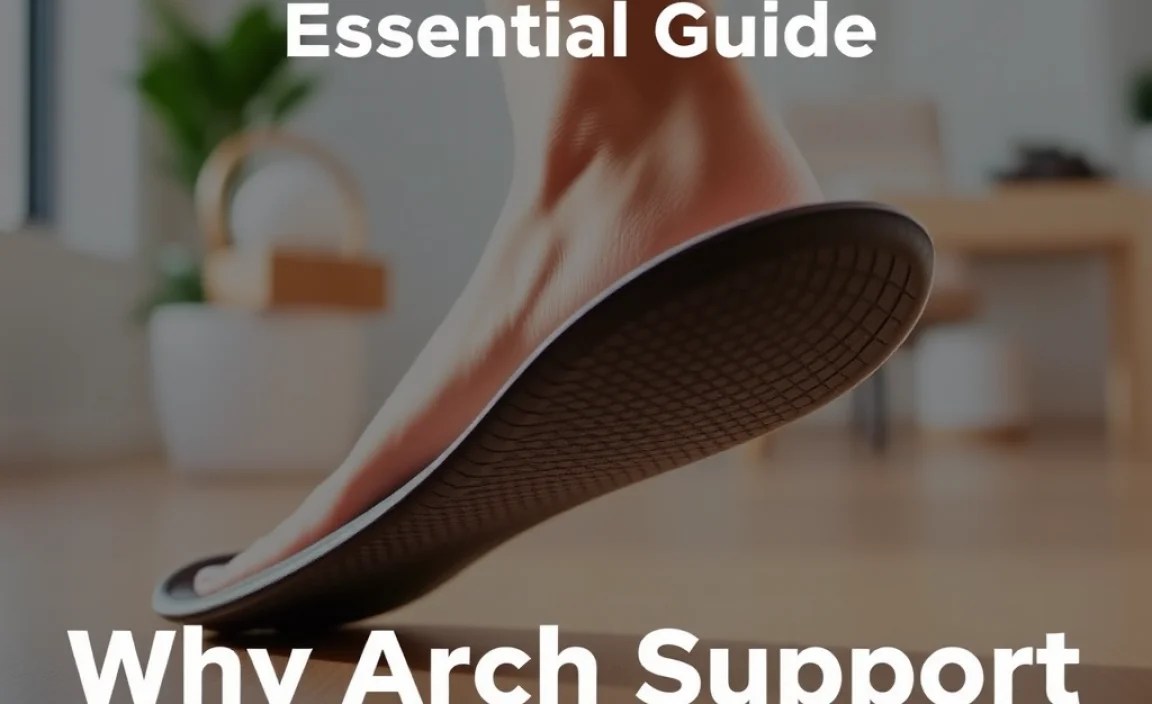
Arch support isn’t just a buzzword; it’s a vital component for foot health and overall well-being. When your arches are properly supported, your whole body benefits. Think of your feet as the foundation of your body. If the foundation is uneven or lacks support, the entire structure can become misaligned, leading to problems that creep up your legs and even into your back.
The Benefits of Good Arch Support
- Pain Relief: This is often the biggest motivator. Proper arch support helps distribute pressure evenly across your foot, reducing stress on the plantar fascia (the band of tissue running along the bottom of your foot) and alleviating pain associated with conditions like plantar fasciitis. It also helps correct overpronation or supination, which can cause pain in the ankles, shins, and knees.
- Improved Stability: Supported arches help your feet remain stable, preventing excessive rolling inward or outward. This is crucial for maintaining balance and reducing the risk of ankle sprains, especially during physical activities.
- Enhanced Shock Absorption: Your feet naturally absorb shock with every step. When your arches lack support, this shock isn’t absorbed effectively, leading to impact that can travel up to your joints. Insoles with good arch support act as an additional cushion, minimizing this impact.
- Better Posture and Alignment: Foot alignment significantly influences your body’s overall posture. Proper arch support can help correct imbalances in your gait, leading to improved posture and reducing strain on your hips, knees, and back.
- Increased Comfort: Simply put, when your feet are happy, you’re happier. Supported feet feel less fatigued, allowing you to stand, walk, and engage in activities for longer periods without discomfort.
Ignoring foot pain isn’t a good strategy. The body is interconnected, and problems in your feet can manifest as pain elsewhere. Investing in insoles with appropriate arch support is an investment in your comfort and long-term health.
Types of Insoles with Arch Support

The world of insoles can seem overwhelming, but they generally fall into a few categories based on their materials, intended use, and the level of support they offer. Understanding these categories will help you narrow down your choices significantly.
Categorizing Insoles
Insoles can be broadly classified by their purpose and the kind of support they provide:
- Athletic Insoles: Designed for high-impact activities. They offer superior cushioning, shock absorption, and stability to withstand the demands of sports like running, basketball, and soccer.
- Everyday Comfort Insoles: These are your go-to for daily wear. They focus on providing a balance of cushioning and arch support for walking, standing for long periods, and general comfort.
- Work/Stability Insoles: Tailored for professions that require extended standing or walking. They often feature firmer support, durability, and may include features like anti-fatigue properties.
- Dress Shoe Insoles: Designed to fit into slimmer dress shoes and heels. They offer a lower profile while still providing essential arch support and cushioning, often prioritizing a snug fit.
Within these categories, you’ll find variations in the firmness of the arch support – from soft and flexible to rigid and supportive. The ‘best’ type depends entirely on your foot type, activity level, and personal preference.
Insole Comparison: Finding Your Perfect Match

Now for the main event! We’ll compare some popular types of insoles with arch support to help you see what might be the best fit for your specific needs. Remember, this is a general comparison, and individual experiences can vary. The ideal insole often comes down to finding what feels best for your feet.
Key Features to Compare
When comparing insoles, pay attention to these factors:
- Arch Shape and Height: Does it match your arch type (high, normal, flat)?
- Material: Is it made of cushioning foam, gel, cork, or a combination?
- Firmness: Is the arch support soft, medium, or rigid?
- Cushioning: How much shock absorption does it offer?
- Durability: How long is it expected to last?
- Intended Use: Is it for athletic, casual, or work shoes?
- Depth: How much space will it take up in your shoe? (Shallow, medium, or deep heel cup adds stability)
Comparison Table: Popular Insole Types
Here’s a look at how different types of insoles with arch support generally stack up. This table will help you visualize the differences at a glance.
| Insole Type | Best For Arch Type | Level of Arch Support | Cushioning Level | Best For Activities | Typical Materials | Price Range (Approx.) |
|---|---|---|---|---|---|---|
| Dynamic/Flexible Support | Normal to High Arches | Medium to High | Medium | Running, walking, general comfort | Polyurethane, EVA foam, gel inserts | $$ – $$$ |
| Rigid/Orthotic Support | Flat Arches (Overpronation), some High Arches | High to Very High | Low to Medium | Walking, standing, injury recovery, work | Sturdy plastics, carbon fiber, firm EVA | $$$ – $$$$ |
| Gel-Based Arch Support | Normal to High Arches | Medium | High | Casual walking, light sports, standing | Silicone gel | $$ – $$$ |
| Cork Arch Support | Normal Arches, mild Flat or High | Medium to High | Medium | Walking, hiking, casual wear | Natural cork, sometimes with leather top layer | $$ – $$$ |
| Memory Foam with Arch Support | Normal and Low Arches; some High Arches | Low to Medium | High | Everyday wear, light activity | Memory foam, often with a supportive core | $ – $$ |
Note: ‘$’ indicates lower price, ‘$$$$’ indicates higher price. Prices are approximate and can vary by brand and specific features.
Pros and Cons of Different Support Levels
The firmness of the arch support is a critical deciding factor.
Flexible/Medium Support
- Pros: Adapts well to natural foot movement, comfortable for most arch types, good for general use and moderate activity.
- Cons: May not be enough for severe overpronation or foot conditions that require very firm support.
Rigid/Firm Support
- Pros: Excellent for correcting overpronation, provides maximum stability, beneficial for specific foot conditions (like plantar fasciitis) or high-impact sports.
- Cons: Can feel too stiff for some, may require a break-in period, not ideal for very high arches if they already have a rigid structure.
It’s worth noting that some companies offer custom orthotics, which are molded specifically to your feet. These are typically the most effective but also the most expensive. For most people, high-quality over-the-counter insoles can provide significant relief and support.
How to Choose the Right Insole for Your Needs

Now that you understand the different types and features, how do you make the final decision? Here’s a step-by-step approach to ensure you pick the insole that’s right for you:
Step-by-Step Selection Guide
- Identify Your Arch Type: As we discussed, this is your starting point. Use the wet test or seek professional advice.
- Consider Your Activity Level: Are you an athlete, a nurse on your feet all day, or someone who just wants more comfort for daily walks? The demands on your feet will help determine the level of cushioning and support needed.
- Assess Your Foot Pain: Where is the pain located? Is it a constant ache, sharp pain, or general fatigue? This can guide you towards specific support features. For example, plantar fasciitis pain often benefits from firm heel and arch support.
- Think About Your Shoes: Insoles need to fit inside your shoes. Some shoes have more room (like athletic shoes or boots), while others are tighter (like dress shoes or loafers). Look for insoles with a profile (low, medium, or high) that will fit comfortably without making your shoes too tight.
- Read Reviews and Research Brands: Look for reputable brands known for quality materials and good customer service. Online reviews can offer insights from people with similar foot issues or activity levels.
- Try Them On (If Possible): If you can, try walking around in the store wearing the insoles. Pay attention to how they feel under your arches and if they provide comfortable support without causing new pressure points.
- Consider the Return Policy: Especially when buying online, a good return policy is crucial in case the insoles don’t work out as expected.
Don’t be afraid to experiment a little. Sometimes, finding the perfect insole is a process of trial and error. Remember that insoles aren’t a one-size-fits-all solution, and what works for someone else might not be ideal for you.
Materials Matter: What to Look For
The materials used in an insole significantly impact its feel, performance, and durability.
- EVA (Ethylene Vinyl Acetate): A common, lightweight, and shock-absorbent foam. It’s a good all-rounder for cushioning and is often found in both flexible and firmer insoles.
- Polyurethane (PU): More durable and often firmer than EVA, providing excellent support and resilience. It’s a popular choice for athletic and work insoles that need to last.
- Gel: Usually made from silicone, gel insoles offer superior shock absorption and can be great for comfort. However, they can sometimes be less structured for arch support and may be slippery.
- Cork: A natural material that molds to the shape of your foot over time, offering supportive and firm cushioning. It’s breathable and good for moderate activity.
- Memory Foam: Known for its plush, contouring comfort. While it offers great initial cushioning, it can sometimes lack long-term firmness and support for the arch, especially with high-impact activities.
- Carbon Fiber: A very strong and lightweight material used in high-performance orthotics. It provides rigid support and is often used in specialized athletic insoles.
Many insoles blend these materials to achieve a balance of cushioning, support, and durability. For instance, a PU base might provide a firm foundation, with an EVA top layer for cushioning and a gel insert for shock absorption.
When to Seek Professional Help
While over-the-counter insoles are fantastic for many people, there are times when professional help is recommended. If you’re experiencing persistent or severe foot pain, or if your pain is accompanied by other symptoms, it’s best to consult a healthcare professional.
Signs You Might Need a Podiatrist
- Severe or Persistent Pain: If your pain doesn’t improve with over-the-counter solutions or is significantly impacting your daily life.
- Sudden Onset of Pain: Especially if it’s not linked to a specific injury.
- Numbness or Tingling: These can be signs of nerve issues.
- Visible Foot Deformities: Such as bunions, hammertoes, or significant changes in your arch.
- Diabetes or Circulation Problems: If you have these conditions, foot health is paramount, and any issues should be addressed promptly by a doctor. Problems like diabetic foot ulcers can develop quickly and require expert care. According to the National Institute of Diabetes and Digestive and Kidney Diseases, proper foot care is essential for individuals with diabetes.
- Pain That Doesn’t Improve: You’ve tried different insoles and home care, but the pain persists.
A podiatrist can perform a thorough examination, diagnose the root cause of your foot pain, and recommend personalized treatment plans, which may include custom-made orthotics. Custom orthotics are designed specifically for your feet and can offer unparalleled support and correction for biomechanical issues.
Frequently Asked Questions (FAQ)
Here are some common questions beginners have about insoles with arch support.
Q1: How often should I replace my insoles?
A: It depends on the insole quality, your activity level, and your weight. Generally, for everyday use, insoles should be replaced every 6-12 months. For athletes or heavier individuals, replacement might be needed every 3-6 months. Look for signs of wear, such as flattened cushioning or worn-out arch support.
Q2: Can I put insoles in any shoe?
A: While you can physically insert insoles into most shoes, they are most effective in shoes that have removable factory insoles and offer a bit of depth. Very flat or tight-fitting shoes (like some dress shoes or ballet flats) might not accommodate an insole well, or the insole might not be as effective. Athletic shoes, boots, and casual walking shoes are usually ideal.
Q3: Will insoles cure my foot pain permanently?
A: Insoles can significantly relieve foot pain by providing support, cushioning, and correcting biomechanical issues. However, they are often part of a broader solution. For lasting relief, especially for chronic conditions like plantar fasciitis or overpronation, a combination of proper footwear, insoles, stretching, and sometimes physical therapy might be needed. They manage symptoms and support healing.
Q4: How do I know if my insoles are working?
A: You should feel a noticeable reduction in foot pain, fatigue, or discomfort after wearing them for a while. Your posture might feel more aligned, and you might experience less strain in your ankles, knees, or back. If you experience new pain or discomfort, the insoles might not be the right fit or type for you.
Q5: Are custom orthotics better than over-the-counter insoles?
A: Custom orthotics are made specifically for your feet and can provide superior correction for unique biomechanical issues. They are generally more supportive and effective for complex foot problems. However, high-quality over-the-counter insoles can be very effective for many common foot ailments and are much more affordable. For many people, an over-the-counter insole is a great starting point.
Q6: Can insoles help with heel pain?
A: Yes, many insoles are designed to help with heel pain, especially conditions like plantar fasciitis. Look for insoles with good heel cushioning and a supportive heel cup. A firmer arch support can also help by reducing strain on the plantar fascia. Some insoles also feature a specific gel pad in the heel for extra shock absorption.
These FAQs should help clear up some of the initial confusion about insoles. Remember, the goal is always to find what brings you the most comfort and support.
Conclusion
Navigating the world of insoles with arch support might seem complicated at first, but by understanding your own feet and what different insoles offer, you can make a confident choice. Remember the key steps: identify your arch type, consider your lifestyle, and compare the features that matter most. Whether you’re an athlete pounding the pavement, a professional on your feet all day, or simply seeking relief from everyday aches, the right pair of insoles can transform your walking experience.
Don’t underestimate the power of good foot support. They are the foundation of your body’s alignment and comfort. Investing in a quality insole can lead to significant improvements in reduced pain, better posture, and overall well-being. And if you find your pain persists or is severe, don’t hesitate to seek professional advice from a podiatrist. Here’s to happier, healthier, and more comfortable steps ahead!
}
@media screen and (max-width: 480px) {
}
;
}
